Dengue is a viral infection spread through the bite of infected mosquitoes. Many children recover with careful monitoring and supportive care, but some can become seriously unwell—often around the time the fever begins to settle. That is why knowing the warning signs matters.
At a glance
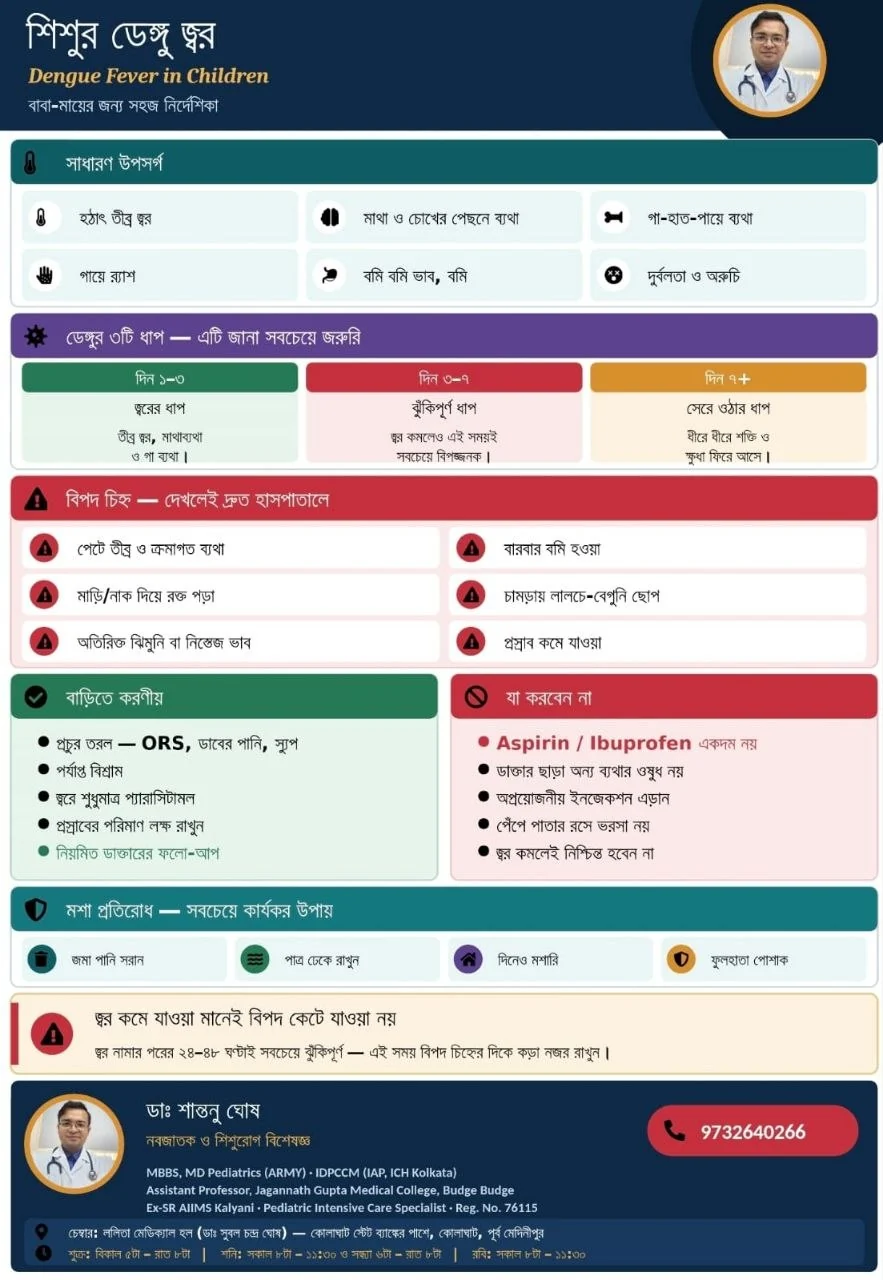
Encourage fluids, let the child rest, use paracetamol only as advised, and watch the child—not just the temperature or platelet count. Avoid aspirin and ibuprofen. Seek urgent care if any warning sign appears.
Common symptoms
Symptoms can vary by age. A child with possible dengue may have:
- Sudden high fever
- Headache or pain behind the eyes
- Body, muscle, joint or bone pain
- Skin rash
- Nausea or vomiting
- Tiredness, weakness or reduced appetite
These symptoms can resemble other infections. A medical examination and appropriate tests are needed to diagnose dengue.
The three phases parents should understand
1. Febrile phase
During the first few days, high fever, headache and body ache are common. Maintain hydration and follow the treating doctor’s advice.
2. Critical phase
This often occurs around days 3–7, commonly as the fever falls. A lower temperature does not always mean the danger has passed. Watch the child closely for abdominal pain, repeated vomiting, bleeding, marked drowsiness, restlessness, breathing difficulty or reduced urine.
3. Recovery phase
Appetite, activity and urine output generally improve. Some children may still feel weak for a while, so continue fluids, rest and follow-up as advised.
Warning signs: seek urgent medical care
Go to a hospital or urgent medical facility promptly if a child develops any of the following:
- Severe or persistent abdominal pain
- Repeated or persistent vomiting
- Bleeding from the nose or gums, blood in vomit or stool, or black stool
- Unusual drowsiness, confusion, restlessness or irritability
- Fast or difficult breathing
- Very little urine, severe thirst or signs of dehydration
- Pale, cold or clammy skin, fainting or profound weakness
- A seizure or any sudden deterioration
Supportive care at home
Home care is suitable only when a clinician considers the child stable and caregivers can monitor closely. Follow the child’s individual plan. General measures include:
- Offer frequent fluids such as ORS, water, soup or other age-appropriate drinks. Continue breastfeeding.
- Encourage rest and light, tolerated food.
- Use paracetamol for fever or discomfort only in the correct age- and weight-appropriate dose advised by a clinician.
- Monitor drinking, vomiting, urine output, breathing, alertness and any bleeding.
- Attend follow-up and blood tests if advised. Platelet numbers must be interpreted together with the child’s clinical condition.
What not to do
- Do not give aspirin or ibuprofen, as these can increase bleeding risk in dengue.
- Do not start antibiotics, steroids or other medicines unless prescribed for a clear reason.
- Do not rely only on a falling fever or a single platelet count to decide that the child is safe.
- Do not force large amounts of fluid at once; offer small, frequent amounts and seek help if the child cannot drink.
- Do not delay hospital assessment when warning signs appear.
Prevent mosquito bites and spread
Dengue mosquitoes commonly bite during the day. Use age-appropriate mosquito repellent, clothing that covers arms and legs, window screens and mosquito nets. Empty and scrub containers that collect standing water at least weekly, cover stored water and keep the surroundings free of breeding sites.
Sources and medical note
This page expands the patient-education material supplied by Dr Santanu Ghosh and was cross-checked against public guidance from the World Health Organization, US Centers for Disease Control and Prevention, and India’s National Guidelines for Clinical Management of Dengue Fever.
This guide provides general education, not a diagnosis or personal treatment plan. Recommendations can differ based on a child’s age, weight, symptoms and medical history.